

The Engine of Life: Modular Biological Reactors
Our patent-pending AirSkeleton™ architecture transforms a standard composting vessel into a Modular Biological Reactor. By utilizing passive aeration & the power of life (worms, microbes, & fungi), we turn organic waste into high-value assets with zero electrical power.
Three "Operating Systems"
1. The Bio-Furnace (Thermophilic):
Focus: Heat-loving bacteria (130°F-160°F).
Asset: Captures thermal energy for greenhouses or industrial water pre-heating.
Recipe: Target 25:1 to 30:1 C:N Ratio
New Manures, Waste Greens, Grass Clippings, Straw & Brown Leaves
2. The Microbial Bank (Mesophilic/Fungal):
Focus: Fungi & Worm networks (Fungal Dominant Soil Inoculant)
Asset: Produces premium, high-diversity inoculants and carbon sequestration credits.
Recipe: Target 30:1 to 60:1 C:N Ratio
Fungal Heavy Carbons, Punky Wood Bottom Layer, Aged Manures, Forest Floor Leaf Shred, Layered top sections with Brown Leaves,Grass Clippings & Green Organic Waste
3. The Volume Crusher (Generalist):
Focus: Rapid bacterial decomposition.
Asset: Maximizes tipping fees by reducing waste volume without odors and reduces costs by not having to mechanically turn piles.
Recipe: Target 15:1 to 20:1 C:N Ratio
Slurry Mix of Waste Greens & Browns, New Manures, Leaf Shred, Garden Waste, Grass Clippings & Mixed Shredded Cardboard
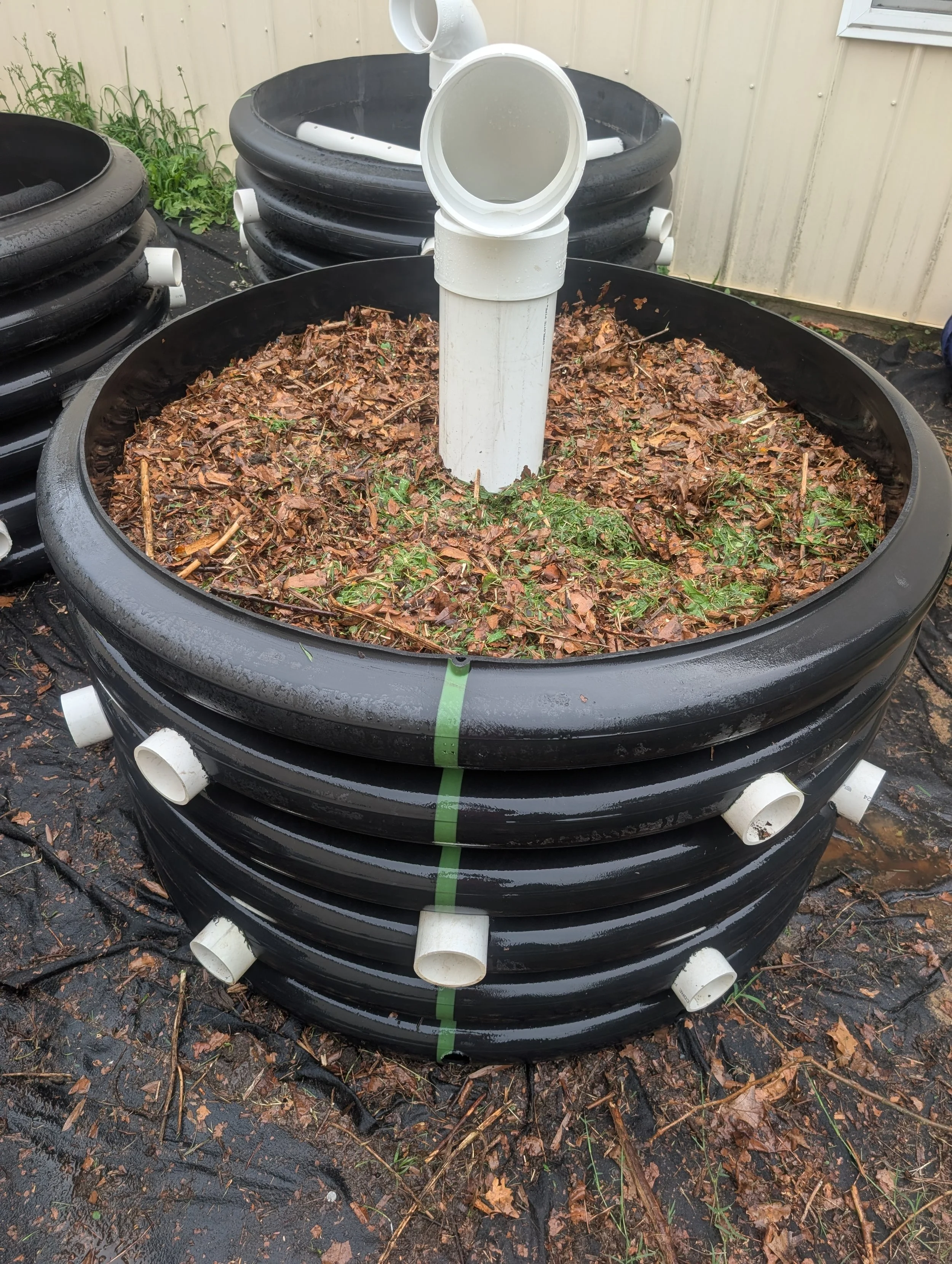
Installation:
-Choose your location for the SoilBiome. Set on level ground.
-Laydown supplied geotextile and fill with your recipe of organic matter. Diverse organic inputs feed different microbial organisms shaping a unique soil profile based on local diversity. See Recipe Chart
-Add the supplied top chimney section and elbow.
Best practices include shredding and presoaking organic matter to maximize ignition. Be sure to monitor moisture levels and do not allow the bioreactor to dry out or become waterlogged. It’s a living system and you are its steward, the rewards are fungal dominant fertilizer for better plants.
Add water as necessary & you don’t have to turn the pile! (Note: Like all composting it is likely to go through a thermophilic phase or heated phase that should kill weed seed, pathogens and pests. It is best to add your worm population AFTER this phase (2-10 days - always check temperature) to insure your worms survive. Feed the top layer with new materials as necessary or as the pile drops to continue feeding your worm population.